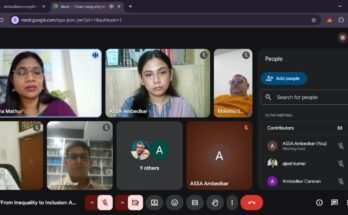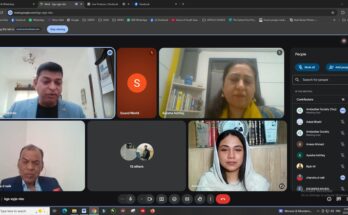
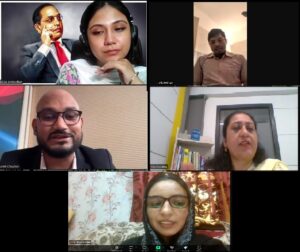
Ambedkar Society for South Asia (ASSA) an Jinnah-Ambedkar Chair organized an international webinar titled “Educated Youth and the Question of Rights: Reading Ambedkar in the Present.” on 15th of Sep 2026 at 2PM
ASSA host outlined the webinar’s agenda, emphasizing the interconnectedness of education and rights, and highlighted modern challenges such as educational inequality, limited opportunities, and social exclusion. The session was set to begin with presentations from guest speakers, including:
1- Sumit Chauhan
Founding Editor TheShudra & TheNewsBeak, Ambedkarite & Anti Caste Journalist, INDIA.
2- Prof. Dr. Ajeet Kumar
Associate Professor, Dept. of History, Atma Ram Sanatan Dharma College, University of Delhi, India
3- Dr. Rahul Ravi Rao
Senior Faculty, Department of Pali, University of Mumbai, INDIA
4- Dr. Ayesha Ashfaq
Assistant Professor at the School of Integrated Social Sciences, University of Lahore, Pakistan
5- Dr. Sheeba Irfan
Adjunct faculty: University of the Punjab Lahore, GIFT University Gujranwala, PHD in South Asian Studies, PAKISTAN
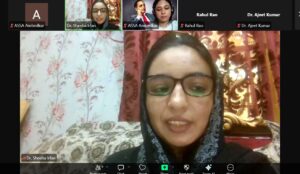
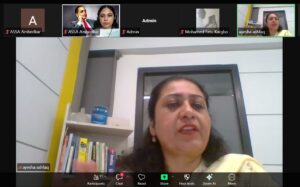
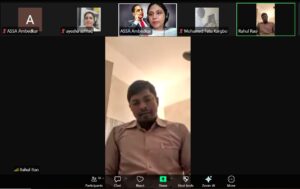
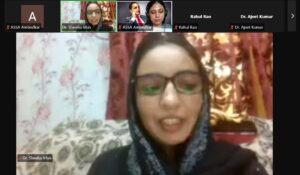
Renowned Journalist Sumit Chauhan discussed Dr. B.R. Ambedkar’s vision of education as an instrument of freedom and emphasized the importance of cultivating independent thought rather than merely accumulating information. Sumit highlighted Ambedkar’s warnings about majoritarianism and authoritarian tendencies in contemporary South Asian politics, particularly in the context of Hindu nationalist ideology. He concluded by urging the educated youth to read Ambedkar not just as a historical figure but as a contemporary critic, and to use their platforms responsibly in the digital age while advocating for gender equality and social justice. Dr. Ajeet emphasized how modern South Asian youth are more aware of their rights and institutional injustices, citing examples like the Cockroach Janta Party (CJP) as a youth movement challenging systemic oppression. He highlighted the critical importance of using education for social change rather than just personal advancement, urging students to leverage their educational privileges to address broader societal inequalities. Dr. Ayesha Shfaq focused on the “Educated Youth Paradox,” arguing that formal equality alone is insufficient to achieve true social justice. She stressed that education must develop critical thinking and responsible citizenship, enabling students to question existing power structures. Her presentation emphasized that rights must be experienced in everyday life with dignity, not just exist as formal legal guarantees. Dr. Rahul Ravi Rao discussed how education should serve as a weapon for emancipation rather than merely a tool for market employability. He critiqued the neoliberal approach to education that reduces students to future workers, arguing instead that education should empower individuals to transform society and challenge injustices while Dr. Sheeba Fan warned against reducing Ambedkar’s radical ideas to mere aesthetics or symbolism without addressing underlying power structures. She emphasized the danger of performative engagement with Ambedkar’s thought that fails to challenge the status quo. Her presentation called for genuine commitment to dismantling oppressive systems rather than superficial acknowledgment of social justice ideals. The discussion highlighted the need for genuine democratization, individual and institutional accountability, and resistance against educational commercialization to truly implement Ambedkar’s vision of social justice. The maximum recorded number of participants was 21 attendees in the main webinar session.