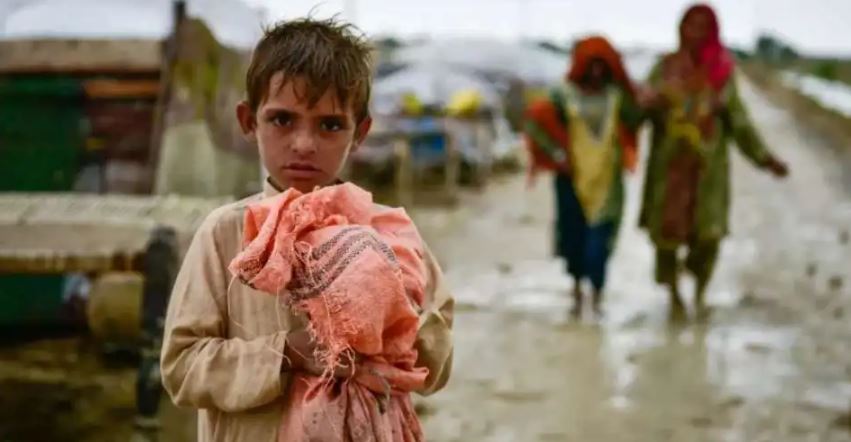
Children from religious minority groups in Pakistan face a high level of discrimination due to systemic bias, social exclusion and institutional neglect, says a report from the state-run National Commission on the Rights of Child (NCRC).
The report: “Situation Analysis of Children from Minority Religions in Pakistan” funded by the UN children’s agency UNICEF and released on Aug. 1, highlights severe challenges faced by minority children, including forced conversions, child labor, and child marriages.
From April 2023 to December 2024, the commission received 27 complaints related to oppression of minority children, including cases of abduction, murder, forced conversion, and underage marriages.
The highest number of case of violence against minority children (40 percent) were reported in Punjab, the most populous province, from January 2022 to September 2024, the report said, citing police data. Among the victims were 547 Christians, 32 Hindus, 2 Ahmadis, 2 Sikhs, and 99 others.
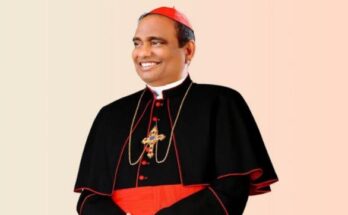
“Children from religious minorities suffer multi-layered discrimination. They face exclusion based on religion, poverty, age, caste, and gender,” said Nabila Feroz Bhatti, a Catholic and member of the NCRC’s Working Group.
“This analysis highlights the intersectionality of these vulnerabilities and calls for urgent action to address forced conversions, early marriages, denial of education, child labor, and social marginalization.”
Religious minorities constitute only 3.72 percent of the population but frequently report systemic discrimination — especially against their children, according to rights activists.
The report identified child labor as the most widespread issue among minority communities, driven by poverty and a lack of educational opportunities.
Forced conversion of girls from Hindu and Christian backgrounds was cited as a particularly alarming trend “with few legal options open to victims.”
From January 2021 to December 2024, at least 421 cases of forced conversions were reported, according to the Center for Social Justice, an advocacy group based in Punjab’s provincial capital Lahore. The victims included 282 Hindu girls, 137 Christians, and 2 Sikhs.
The NCRC urged authorities to strengthen legal protections, expand social safety nets, create inclusive education policies, and adopt specific measures to counter child and bonded labor as well as forced religious conversions.
However, experts say the NCRC report falls short of addressing caste-based discrimination within religious minority groups.
“The report mentions caste and gender intersectionality but doesn’t explain how caste shapes daily discrimination,” said Mary James Gill, a Christian politician, former lawmaker and director of the advocacy group, Center for Law and Justice.
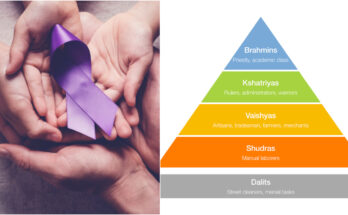
“For Dalits and Christians, caste marginalization is the first layer of exclusion — even before religion. Children of sanitation workers, unlike others, are stigmatized because of their parents’ occupation.”
Gill added that lower-caste groups face far more barriers than relatively privileged upper-caste Hindus or Bahais, who have better access to education and opportunities.
A joint study by Amnesty International and the Center for Law and Justice, released on July 30, echoed these concerns.
Based on focus group discussions with 231 sanitation workers across six districts, the study found that 18 respondents reported their children faced school-based discrimination due to their parents’ jobs.
“One participant from Lahore shared how a classmate used the derogatory term chuhra to refer to her daughter,” the report stated.
Chuhra is a slang term used for non-Muslim sanitary workers in many parts of Pakistan.
According to the Institute of Development and Economic Alternatives, minority children in Pakistan are 1.6 times more likely to be school drop-outs than their peers from majority communities.
Source: UCA News