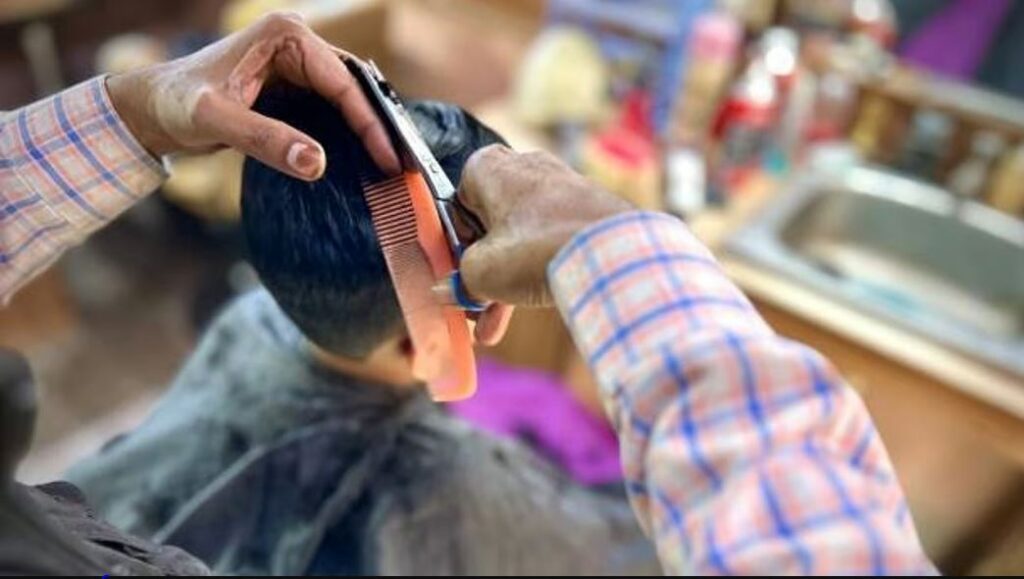
The Karnataka government’s decision to open a state-run barber shop for Dalits in Shingatalur village in Gadag district raises a basic question: when did the state enter the salon business? The move, widely projected as a progressive intervention against caste discrimination, is an admission of administrative failure, dressed up as welfare. The incident that prompted the decision is deeply shameful. Dalit residents were denied haircuts by local barbers belonging to the Hadapada community, who cited “religious tradition” linked to the village deity, claiming that serving Dalits would invite misfortune. When authorities intervened, barbers shut shop in protest rather than obey the law. Faced with defiance, the government chose to bypass the problem by creating a parallel service. This effectively legitimises untouchability by building new walls, rather than demolishing them.
Undeniably, the shop offers immediate relief. No citizen should be forced to travel to another village for something as basic as a haircut. But relief is not the same as justice. By opening a separate, government-run facility, the state risks institutionalising segregation. If discrimination in private salons is met by state-run alternatives, what next? Separate hotels, because Dalits are denied entry? Separate grocery stores? Separate temples? This workaround approach treats untouchability as an inconvenience to be managed, not a crime to be punished. Denial of service on caste grounds is a cognisable offence under the Protection of Civil Rights Act, 1955, and the SC/ST (Prevention of Atrocities) Act. The problem is not the absence of legal tools, but the reluctance to use them with the full force of law. Licences can be cancelled. Establishments can be sealed. Offenders can be arrested and prosecuted. Yet enforcement remains weak.
The rot is visible in conviction rates. National Crime Records Bureau data show that convictions under the Atrocities Act are only around 7% in Karnataka. Low convictions embolden offenders and signal that social boycotts carry little cost. There is also a greater social danger. State-run facilities — even those intended to be inclusive — may normalise exclusion in the public mind if they are perceived as “Dalit-specific” solutions. Equality cannot be delivered through partitions; it must be enforced in shared spaces. The answer lies in sustained education on equality, visible and swift punishment for violators, higher-quality investigations, and a sharp rise in convictions. The state must make discrimination economically and legally unviable, not administratively convenient. A government that prides itself on social justice cannot settle for cosmetic fixes. Its duty is not to cut hair, but to cut through caste.
Source: Deccan Herald