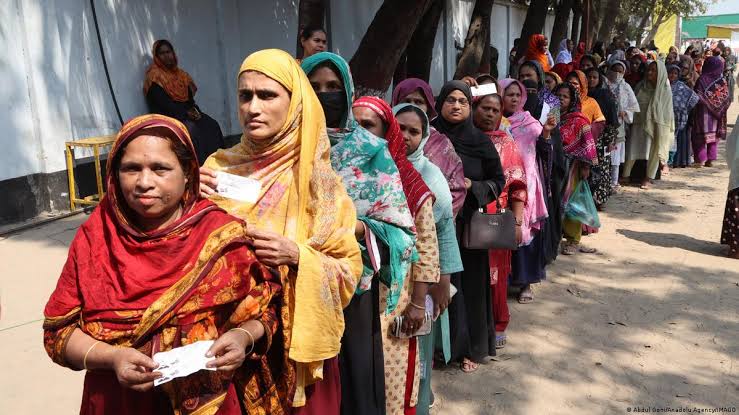
Politicians and rights activists on Sunday demanded ensuring leadership and meaningful participation of the Dalit community women in the upcoming local government elections.
At a roundtable organised by Avijan, a platform working for Dalit community rights, in the city, they urged the government to create an environment so that the marginalised community women could contest the polls and elect people’s representatives from the Dalit community.
They identified caste-based discrimination, low income, limited education, lack of political networks and inadequate institutional support as major obstacles for Dalit women to participate as candidates in the polls.
Addressing the discussion, prime minister’s political adviser Zahir Uddin Swapon pointed out the discrimination and injustices faced by people from different ethnicities.
‘Respecting all people equally, regardless of disability, religion, language or ethnicity, was a fundamental value necessary to build an inclusive society,’ he said.
He added that the government was determined to establish an inclusive society and ensure participation of people from every community.
Bangladesh Mahila Parishad president Fawzia Moslem stressed the need for education to ensure participation of women, including from Dalit community, in all sectors.
Avijan executive director Banani Biswas noted that political parties often provide limited nomination opportunities to Dalit women, while social practices and gender-based discrimination also restricted their leadership.
She called for stronger Dalit women’s leadership, increased political representation and coordinated advocacy involving civil society, researchers, development organisations and local authorities.
At the event, Research and Development Collective researcher Jannatul Ferdous Lucky read out a policy brief.
Citing a past study, she said that nearly 89.2 per cent of Dalit women in Bangladesh said that they can vote, but only 15.9 per cent reported being able to become local election candidates and just 12.6 per cent said they have served as Union Parishad members, exposing a stark gap between voting rights and political representation.
PM’s special assistant on minority issues Bijan Kanti Sarker, lawmakers from reserved seats Fahmid Haque, Madhabi Marma, and Newaz Halima Arly, and former general secretary of the Communist Party of Bangladesh Ruhin Hossain Prince also spoke at the event.
Source: New AgeBD