Dalit Women and the Fullness of Life arrives at a moment when Dalit women continue to be simultaneously hypervisible (in death and violation) and invisible (in life). In newspapers, NGO brochures, academic conferences and social media feeds, Dalit women appear repeatedly as violated bodies, statistical evidence, symbols of suffering but rarely are they allowed humane complexity. Rarely are they permitted joy. In this courageous and intellectually stirring book, the researcher and activist, Christina Dhanuja, rejects this flattening with remarkable clarity and tenderness. She asks a deceptively simple but politically explosive question: what would it mean for Dalit women not merely to survive but to live fully?
The book moves across 10 interconnected chapters on identity, labour, community, sisterhood, body, desire and joy, among others. Blending memoir with sharp structural critique, Dhanuja creates a text that is at once deeply personal and analytically rigorous. Each chapter ends not with neat conclusions but with difficult, hard-hitting questions. This methodology of active questioning becomes one of the book’s most radical interventions.
In chapter after chapter, the book interrogates the ecosystems that sustain reductive narratives about Dalit women and who benefits from them. “So why are they not part of popular narratives?” Dhanuja asks. “Why are we not celebrated as much as we are pitied?” These questions cut sharply through the savarna imagination that recognises Dalit women only through injury. The critique here is not merely representational. Dhanuja reveals how victimhood itself becomes institutional currency. Brutalised images of Dalit women circulate recklessly through mainstream and social media alike, their pain consumed publicly without dignity or consent. NGOs reduce lives into funding statistics. Researchers extract stories while leaving structures intact. Society, in the meantime, continues to benefit from caste labour while disavowing caste violence.
What makes the book especially powerful is its refusal to romanticise resilience. Dalit women are not presented as endlessly enduring figures forged only through suffering. Dhanuja insists instead on their interiority: their contradictions, desires, fragilities, pleasures and ambitions. “We want solidarity — but not in exchange for our individuality. We want dignity, and rightly so; we want it free,” she writes. In a political culture where solidarity often demands the erasure of difference, this line lands with enormous force.
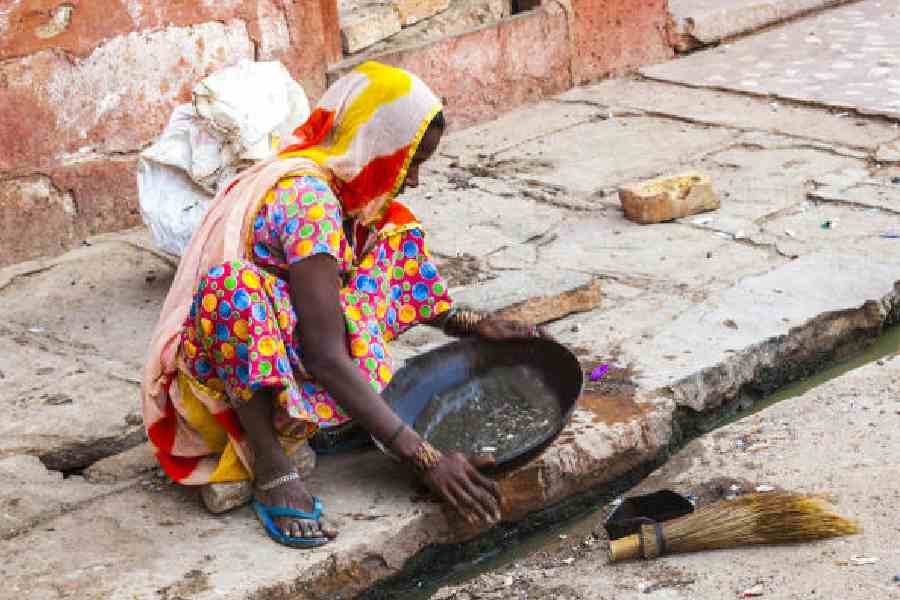
Some of the book’s most compelling sections emerge in its discussion of labour and the body. Dhanuja asks why the dominant discourse around working Dalit women remains obsessed with workforce participation rather than the quality and the conditions of work itself. This is an important intervention in a neoliberal moment that celebrates ‘empowerment’ while normalising exhaustion, precarity and extraction. Particularly moving is her engagement with fragility. Dalit women’s bodies, she argues, have historically been imagined as naturally suited for hard labour and, therefore, less deserving of care, rest or protection. “Only by denying our fragility can labour be extracted from us,” writes Dhanuja. In reclaiming fragility as a human condition rather than a weakness, Dhanuja dismantles one of caste society’s cruellest assumptions.
The book is equally incisive in its critique of tokenistic politics. Dhanuja argues that true transformational politics would require Dalit women not simply to be “included” but to become decision-makers, shaping the trajectories of feminist and anti-caste movements alike. What would it mean, she asks, for Dalit women to become founding members, general-secretaries, and executive directors of mass movements? The question exposes how power shrewdly reproduces itself within so-called progressive spaces.
There is anger in this book, but also immense hope and creative imagination. It insists that fullness is not an abstract aspiration but a political demand — the right to joy, complexity, beauty, intimacy and rest in a society structured through graded dehumanisation. Dhanuja demands that we dismantle the very frameworks through which Dalit women have been seen, studied and spoken about so often. It is this refusal — fierce, lyrical and uncompromising, all at once — that makes the book unforgettable.